

Hey there! As a supplier of PVC Ceiling Panel Machines, I often get asked, "How long does it take to produce a batch of PVC ceiling panels with a machine?" Well, let's dive right into this and break it down step by step.
First off, the production time of a batch of PVC ceiling panels can vary quite a bit. It depends on several factors such as the type of machine, the complexity of the panel design, and the production capacity you've set.
Let's start with the machine itself. Our PVC Ceiling Panel Machine is designed to be highly efficient and user - friendly. It has a modern and advanced control system that allows for precise operation. But different models of the machine have different production speeds. For example, some of our entry - level machines can produce around 20 to 30 meters of ceiling panels per hour. If you're aiming to produce a batch of say, 1000 meters of panels, it would take roughly 33 to 50 hours non - stop production.
On the other hand, our high - end models can work at a much faster pace. They can produce up to 50 to 60 meters of ceiling panels per hour. With these machines, producing the same 1000 - meter batch would take only about 16.7 to 20 hours. And that's a significant time difference!
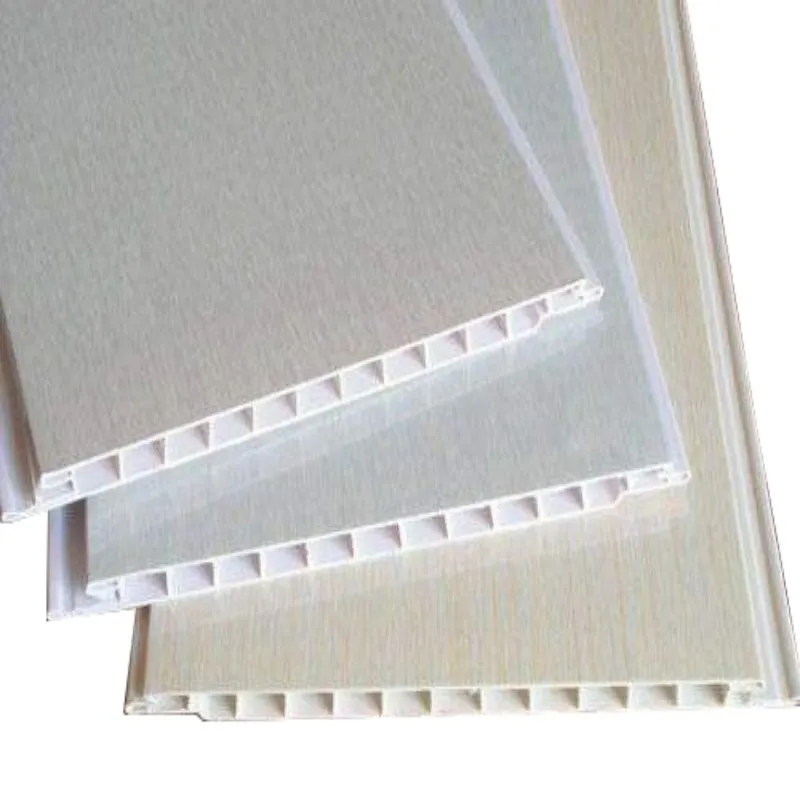
The complexity of the panel design also plays a huge role. Simple, flat PVC ceiling panels are much quicker to produce compared to those with intricate patterns or textures. A standard, smooth - surfaced panel doesn't require any additional processing steps like embossing or special printing. So, the machine can focus solely on the extrusion and cutting processes.
However, if you want your panels to have a fancy pattern, like a wood - grain texture or a floral design, it takes extra time. The machine has to perform additional operations. There's the embossing process, where the pattern is pressed onto the panel while it's still in a semi - molten state. And then there might be a printing process if you need colored elements on the pattern. These extra steps can add several hours to the production time of a batch.
Another factor is the production capacity setting. You can adjust the speed of the machine based on your needs. If you're in a rush to fulfill a large order, you might set the machine to its maximum capacity. But keep in mind that running the machine at full speed all the time can put extra wear and tear on it. Also, the quality control might be a bit more challenging at high speeds.
On the contrary, if quality is your top priority and you have more time, you can set the machine at a slower pace. This allows for better control over the extrusion process, ensuring that each panel is of the highest quality. For instance, if you set the machine to produce at a conservative speed of 15 meters per hour, a 1000 - meter batch will take around 66.7 hours.
Now, let's talk about the overall production process. It starts with the raw materials. PVC granules, along with other additives and pigments, are fed into the hopper of the machine. The machine then heats and melts these materials to form a homogeneous melt. This melt is then extruded through a die, which gives the panel its shape.
After extrusion, the newly formed panel goes through a cooling process. This is crucial because it helps the panel solidify and maintain its shape. The cooling time can also vary depending on the thickness of the panel. Thicker panels take longer to cool down compared to thinner ones.
Once the panel is cooled, it's cut to the desired length. And if there are any post - processing steps like embossing or printing, they are carried out at this stage.
It's also important to consider the downtime for maintenance. Just like any other machine, our PVC Ceiling Panel Machine needs regular maintenance to keep it running smoothly. This includes cleaning the extruder, checking the heating elements, and lubricating moving parts. Depending on the usage, maintenance might be required every few days to a couple of weeks. During maintenance, the production has to stop, which adds a bit of extra time to the overall batch production.
If you're thinking about expanding your product range, we also offer other related machines like the PVC Glazed Roof Tile Extrusion Line. This line can produce high - quality PVC glazed roof tiles, which are a great addition to your product portfolio if you're in the building materials business. And for those interested in foam profiles, our PS Foaming Profile Production Line is a top - notch option. It can produce various types of PS foaming profiles with excellent quality.
In conclusion, the time it takes to produce a batch of PVC ceiling panels with a machine can range from around 16.7 hours for a high - end machine running at full capacity for a simple panel design to over 66.7 hours for a slower - speed production of a more complex batch. There are many factors at play, and it's important to consider your specific needs, such as production volume, quality requirements, and budget.
If you're interested in our PVC Ceiling Panel Machines or any of our other products, don't hesitate to reach out. We're always here to answer your questions and help you find the best solution for your business. Whether you're a small - scale manufacturer looking to start your production or a large - scale enterprise aiming to upgrade your equipment, we've got the right machine for you. Let's have a chat and see how we can work together to boost your production efficiency and product quality.
References

- Industry knowledge and experience from years of working in the PVC ceiling panel machine manufacturing field.
- Technical specifications of our PVC Ceiling Panel Machine, PVC Glazed Roof Tile Extrusion Line, and PS Foaming Profile Production Line.


