


Plastic Pipe Extrusion Line
Your Professional Plastic Pipe Extrusion Line Manufacturer!
Zhangjiagang Plastech Machinery Technology Co., Ltd. is located in Zhangjiagang City, It is a professional manufacturer of plastic machinery that integrates design, research and development, and production; We mainly produce kinds of plastic crushing washing, pelletizing recycling machines, as well as kind of plastic sheet, board, and profiles pipes extrusion machines.


Why Choose Us
Rich Experience
Our company has over 10 years of experience in plastic machine manufacturing.
End-To-End Services
We have always adhered to the concept of quality is the most important, service is the top priority.
Excellent Technology
Technological innovation, continuously improve our own strength, to provide more comprehensive and efficient solutions for customers.
Advanced Equipment
We have a complete range of machining equipment and a very mature production process. The equipment developed based on the latest technology has higher efficiency, better performance and stronger reliability.
Main Technical Parameters
|
Model/data |
Diameter |
Extruder |
Speed |
Max |
Installed |
|
SJ50 |
6-20mm |
LSJ50/30 |
1-11m/min |
40Kg/h |
50KW |
|
SJ65 |
12-38mm |
LSJ65/30 |
1-10 m/min |
80Kg/h |
65KW |
|
SJ75 |
20-50mm |
LSJ75/30 |
1-7m/min |
100Kg/h |
75KW |
|
Model |
JS45 |
JS65 |
JS90 |
JS120 |
|
Extruder |
SJ45/30 |
SJ65/30 |
SJ90/30 |
SJ120/30 |
|
Diameter Range(mm) |
12-25 |
20-50 |
50-102 |
75-150 |
|
Output(kg/h) |
20-40 |
40-75 |
70-130 |
100-150 |
|
Installed Power(kw) |
30 |
40 |
50 |
75 |
Advantages of Plastic Pipe Extrusion Line

Cost-effective
Plastic pipe extrusion lines allow for high production rates, reducing labor and material costs compared to other methods. The continuous production process ensures minimal wastage, optimizing resource utilization.

Versatility
Plastic pipe extrusion lines can produce pipes of various shapes, sizes, and materials, including PVC, HDPE, and PPR, catering to the different needs of industries such as plumbing, agriculture, and construction.

Easy maintenance
The components of plastic pipe extrusion lines can be easily replaced or repaired, minimizing downtime and ensuring uninterrupted production.

Precision and consistency
The extrusion process provides high precision and consistency in terms of pipe size, wall thickness, and material properties. This results in high-quality pipes that meet industry standards and customer specifications.
Applications of Plastic Pipe Extrusion Line
Water Supply and Plumbing
One of the most common applications, plastic pipes for water supply are favored for their corrosion resistance and ease of installation. These pipes are used in residential, commercial, and municipal infrastructure. The extrusion lines produce pipes with precise diameters and smooth surfaces, reducing flow resistance and leakage risks.
Gas and Oil Transportation
Plastic pipes are increasingly replacing traditional metal pipelines for gas and oil due to their lightweight nature and resistance to corrosion. Extrusion lines produce high-strength PE pipes that can withstand high pressure and environmental stress. These pipes are used in underground pipelines, especially in remote or environmentally sensitive areas.
Agricultural Irrigation
Plastic pipes are vital in modern agriculture for irrigation systems. They are lightweight, flexible, and resistant to chemicals used in fertilizers and pesticides. Extrusion lines produce various diameters for drip, sprinkler, and surface irrigation. Adoption is widespread in regions aiming to improve water efficiency and crop yields.
Telecommunications and Data Cables
Plastic pipes also serve as conduits for electrical and fiber optic cables. These protective pipes are produced on extrusion lines designed for small diameters with smooth inner surfaces. They are used in underground and underwater installations, where durability and protection from environmental factors are critical.
Medical and Pharmaceutical Applications
In the medical field, plastic pipe extrusion lines produce specialized tubing for IVs, catheters, and other devices. These require high purity, biocompatibility, and strict dimensional tolerances. The lines used are highly automated, with cleanroom capabilities to meet regulatory standards.

Key Components of Plastic Pipe Extrusion Lines
Extruder
The extruder is the heart of the extrusion line, responsible for melting and mixing the plastic pellets. It typically consists of a barrel, screw, and heating elements. The screw design and barrel length can significantly impact the mixing and melting efficiency of the plastic material.
Die
The die is a critical component that shapes the molten plastic into a pipe. It must be precisely engineered to ensure uniform thickness and smooth surface finish of the pipe. The die design also affects the overall production speed and efficiency.
Cooling system
After the plastic is extruded through the die, it needs to be cooled and solidified. Cooling systems can include water baths, air cooling, or a combination of both. Proper cooling ensures that the pipe maintains its shape and dimensions without warping or shrinking.
Puller
The puller is responsible for pulling the cooled pipe through the extrusion line at a consistent speed. It ensures that the pipe is produced with uniform dimensions and prevents defects such as ovality or uneven thickness.
Cutting and coiling unit
Once the pipe is extruded and cooled, it needs to be cut to the desired length or coiled for storage and transportation. Cutting and coiling units are designed to handle various pipe sizes and materials, ensuring precise and efficient processing.
The Extrusion Process: A Step-by-Step Breakdown
The plastic pipe extrusion process is a continuous sequence of steps that transform raw materials into finished plastic pipes. Here is a step-by-step breakdown of how the process works:
Material Feeding: The process begins by loading plastic pellets (often made from materials like PVC, HDPE, or PP) into the feed hopper. The pellets are typically stored in large silos or hoppers and are fed into the extruder in a controlled manner to ensure a steady flow of material.
Melting the Plastic: Once the material enters the extruder, the screw inside the extruder barrel rotates, slowly pushing the plastic pellets forward. The extruder uses heating zones to melt the plastic at various stages. The plastic gradually softens as it moves down the barrel, eventually becoming a molten form.
Shaping the Plastic: As the molten plastic reaches the end of the extruder, it is forced through the die. The die is custom-designed to produce the desired pipe size and shape. The plastic exits the die as a continuous pipe, still in a molten state, which is then ready for cooling.
Cooling the Pipe: After exiting the die, the hot plastic pipe is quickly cooled using water or air in the cooling tank. The cooling process solidifies the pipe, helping it retain its shape and size. The cooling tank can be adjusted to ensure optimal cooling conditions, and in some cases, a vacuum tank may be used to maintain the pipe’s roundness.
Hauling the Pipe: The haul-off unit pulls the cooled pipe through the system at a controlled speed, ensuring that the pipe maintains a uniform diameter and thickness. The haul-off unit is synchronized with the extrusion speed to ensure a consistent pipe length.
Cutting the Pipe: Once the pipe has been hauled through the cooling process, it is cut into the required lengths using a cutting system. The cutting system can be a saw or rotary cutter, which ensures precise cuts and minimal waste.
Stacking and Packaging: After cutting, the pipes are transferred to a stacker or conveyor, which organizes them for packaging or further processing. The pipes can be bundled together, labeled, and sent to customers or warehouses for storage.
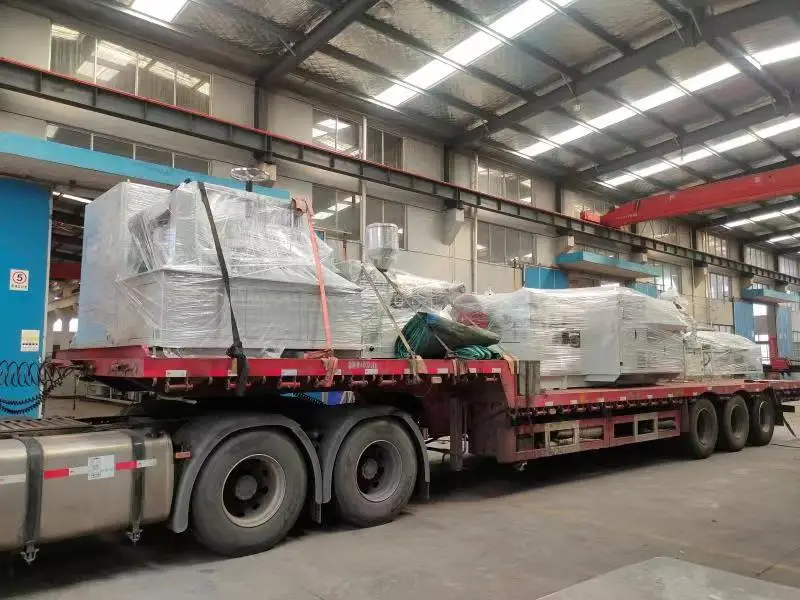
Packaging and delivery
01
Package
We use strong seaworthy wooden crates, wooden pallets, waterproof polyethylene film, etc.
02
Transportation
Sea transportation includes trains and railways, and air transportation ports include Shanghai Port.
03
Delivery Time
Normally it takes 10-20 days if the goods are in stock. Or it is 35-60 days if the goods are not in stock, it is according to quantity.
FAQ