


PP PE Film Crushing Washing Recycling Machine

PP PE Film Crushing Washing Recycling Machine suppliers
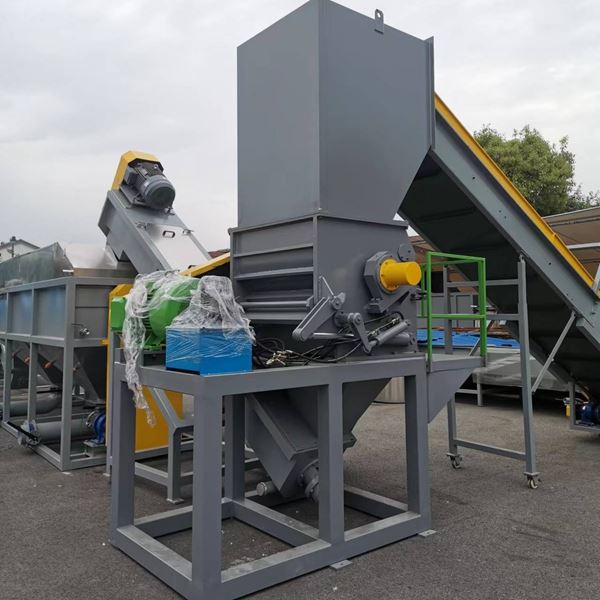
PP PE Film Crushing Washing Recycling Machine factory
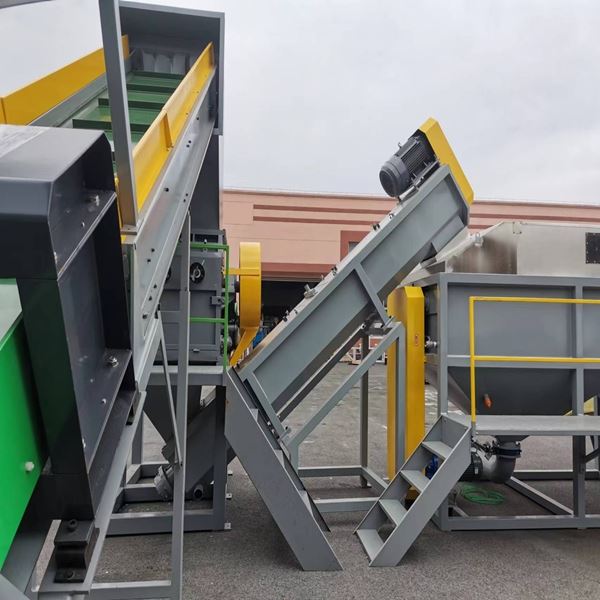
PP PE Film Crushing Washing Recycling Machine best

PP PE Film Crushing Washing Recycling Machine high quality
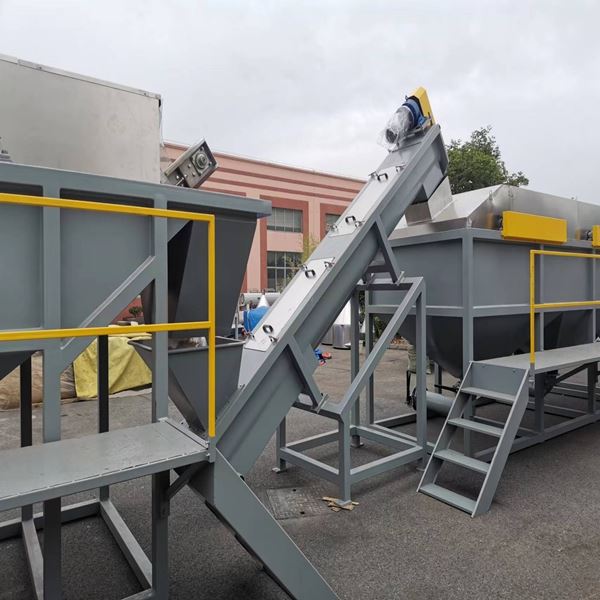
PP PE Film Crushing Washing Recycling Machine price
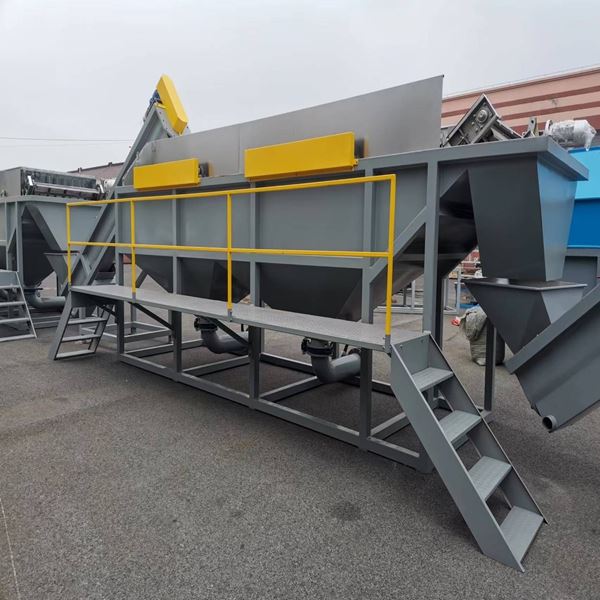
PP PE Film Crushing Washing Recycling Machine best
PP PE Film Crushing Washing Recycling Machine price
PP PE Film Crushing Washing Recycling Machine
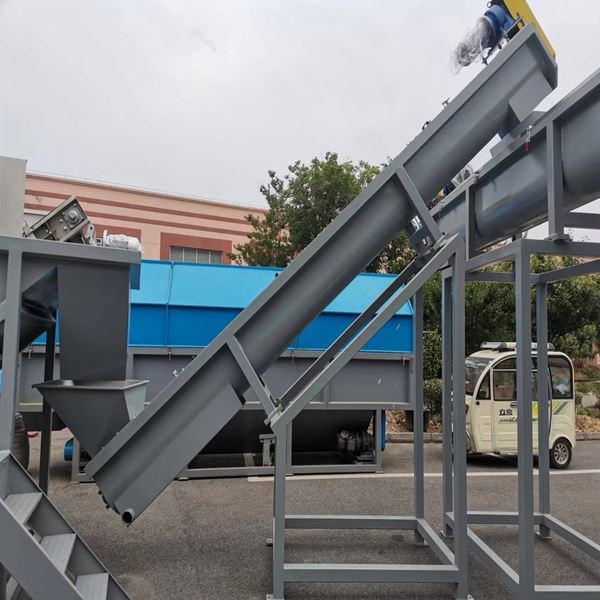
The PP PE film crushing washing recycling machine is a complete set of equipment specifically designed to process waste PP (polypropylene) and PE (polyethylene) film materials and convert them into renewable plastic sheets (Flakes) or pellets.
This type of production line mainly processes waste plastics such as greenhouse film, plastic film, packaging film, handbags, wrapping film, and daily chemical bottle caps (PP). The core challenge lies in the fact that these materials usually have high impurities (sediment, moisture, labels), low density, and are easy to entangle, so the process design is significantly different from PET bottle lines.



Core process flow
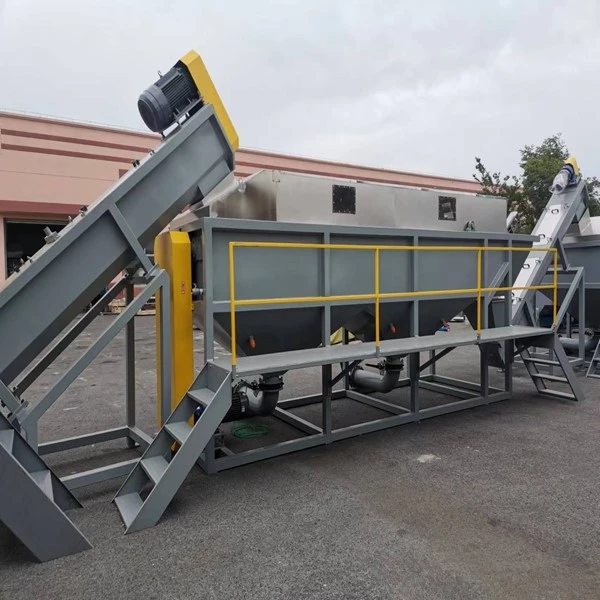
A standard PP PE film crushing washing recycling machine mainly includes the following core processes:
1. Pre treatment - feeding and coarse crushing
·Purpose: To preliminarily reduce the size, break the winding characteristics of the film, and facilitate subsequent processing.
·Equipment: metal detector, slow shredder (or coarse crusher).
·Process: Before entering the production line through the conveyor belt, the material is first removed of iron impurities by a metal detector to prevent damage to subsequent equipment. Then enter the shredder and use a low-speed, high torque blade shaft to shred large rolls and clumps of film into smaller pieces.
2. Friction cleaning - main cleaning process
·Purpose: This is the heart link of the entire line, which strongly removes stubborn pollutants such as mud, oil, and some labels attached to the surface of the film.
·Equipment: Friction cleaning machine (also known as "scrubbing machine").
·Process: Crushed film, hot water, and cleaning agent enter a tilted U-shaped groove together. The groove is equipped with high-speed rotating spiral blades, which push the material forward while generating strong friction and rubbing between the material and the material, as well as between the material and the cylinder wall. The dirty water is continuously discharged through the bottom filter screen.
3. Rinse and Separation - Deep Purification
·Purpose: To separate impurities of different densities (such as sediment) and further rinse off residual dirt and cleaning agents.
·Equipment: Spiral propeller, sedimentation rinsing tank, high-speed friction cleaning machine.
·Process:
·The material cleaned by friction enters the rinsing tank. Separation is achieved through mixing and water flow, utilizing density differences
·PP/PE film: with a density lower than water, it will float on the water surface and be pushed away by a screw propeller.
·Sediments, stones, metal shavings, etc.: with a density greater than water, they will sink to the bottom of the pool and need to be cleaned regularly.
·The PP/PE material from flotation will enter the next high-speed friction cleaning machine or rinsing machine for final precision washing and rinsing to ensure cleanliness.
4. Dehydration - mechanical dehydration
·Purpose: To remove as much free water as possible from the surface of the film, greatly reducing the load on the drying system and saving energy consumption.
·Equipment: Centrifugal dewatering machine.
·Process: The cleaned wet film enters the basket of the high-speed rotating dehydrator. Under the strong centrifugal force, the moisture is completely thrown out, and the moisture content of the material can be reduced to 8% -15%.
5. Drying - Thermal Dehumidification
·Purpose: To completely evaporate the residual moisture inside and on the surface of the dehydrated membrane, meeting the requirements for subsequent granulation or storage (usually requiring a moisture content of less than 1%).
·Equipment: Airflow drying system (most commonly used), friction dryer, spiral dryer.
·Process: The dehydrated material is sent to the drying system and thoroughly mixed with high-temperature, high-speed hot air. The moisture is instantly evaporated and carried away with the airflow. The dried hot material needs to be cooled by a cooling system to prevent clumping.
6. Granulation (optional) - Shaped into granules
·Purpose: After melting and filtering clean PP/PE sheets, granulation is carried out to obtain recycled particles with higher purity, uniformity, and ease of transportation and processing.
·Equipment: screw extruder, melt filter, pellet cutter.
·Process: The dried sheet is fed into the extruder through a feeder and melted under high temperature and pressure. The melt is filtered out of extremely fine impurities through a porous filter (screen changer), and then extruded into strips through mold holes. After being cooled by water, it is cut into uniform cylindrical particles by a granulator.
Production line flowchart (simplified material flow)
Waste film feeding → Metal detector → Slow shredder → Conveyor belt → Friction cleaning machine (hot wash+cleaning agent) → Spiral elevator → Sedimentation rinse tank → High speed friction cleaning machine (clean water rinse) → Spiral elevator → Centrifugal dewatering machine → Airflow drying system → Vibration screen → Finished product bin → (optional) Extrusion granulator → Packaging
(Discharging dirty water) (Settling sediment) (Discharging wastewater)
Final product and application
·Product:
1. PP/PE recycled sheet: The direct product after drying, which can be used for direct sale or production of low-end products.
2. PP/PE regenerated particles: Products obtained through melt granulation have higher value and wider applications.
·Main purpose:
·Blow molding: manufacturing trash cans, turnover boxes, pallets, etc.
·Injection molding: manufacturing flower pots, water pipe joints, industrial accessories, plastic trays, etc.
·Compression molding: Manufacturing large products such as manhole covers and inspection wells.
·Blowing film again: producing low demand film products such as garbage bags and shopping bags (usually requiring the addition of new materials).
Key Technologies and Considerations (Differences from PET Line)
1. Anti entanglement design: The film is easily entangled in equipment, so the spiral design of slow shredders and friction cleaning machines is crucial. It must be able to effectively break the entanglement and ensure smooth material flow.
2. Efficient impurity removal: Agricultural film and greenhouse film have extremely high sediment content, and multi-stage friction cleaning and sedimentation rinsing tanks are the core to ensure cleaning effectiveness. A powerful sewage sedimentation and circulation system is essential.
3. Density sorting: Fully utilize the characteristic of PP/PE density being lower than water, and effectively separate submerged impurities (stones, glass, etc.) through flotation.
4. Label and paper removal: For packaging films with labels and paper, pulp impurities are usually separated through friction and flotation after crushing and cleaning.
5. High energy consumption process: Cleaning (heating water) and drying are the main energy consumption points, so an efficient dehydrator is the key to reducing drying energy consumption.
6. Sewage treatment: The generated waste cement sand content is high, and the COD (chemical oxygen demand) is high. It is necessary to build supporting sewage treatment facilities such as sedimentation tanks and air flotation machines to achieve water recycling and strict environmental protection requirements.
I hope this detailed explanation can help you fully understand the PP/PE film recycling and cleaning line. If you would like to further understand a specific link or device, please feel free to contact us for consultation.
→After the waste film is collected, it will be pre-processed --- Pre-cut or shred the large rolls/bales of waste film into smaller size, and then fed the sand remover machine to have sand removal treatment, because too much sediment content will reduce the crusher blades working life, which will also affect the cleaning quality.
→The film will be low sand content after sand-remover machine, Then it enters the crusher for fine crushing treatment. When crushing, water is added for crushing, which can play a role of preliminary cleaning.
→The bottom of the crusher is equipped with an eccentric friction elution machine, which can wash out the mud and dirty water on the film. The section is filled with water for friction cleaning, and the cleaned sediment is above 99%.
→The cleaned film enters the sink and floats rinsing tank for rinsing, and the rinsed film material is dug into the squeezing machine by the excavator for squeezing and dewatering. Subsequent to be connected to the granulating line to make granules.

Hot Tags: pp pe film crushing washing recycling machine, China pp pe film crushing washing recycling machine manufacturers, suppliers, factory, polystyrene recycling equipment, shredding plastic machine, household plastic shredder, pp granulator machine, pet flakes to fiber machine, pet bottle recycling machine price
You Might Also Like


Send Inquiry