


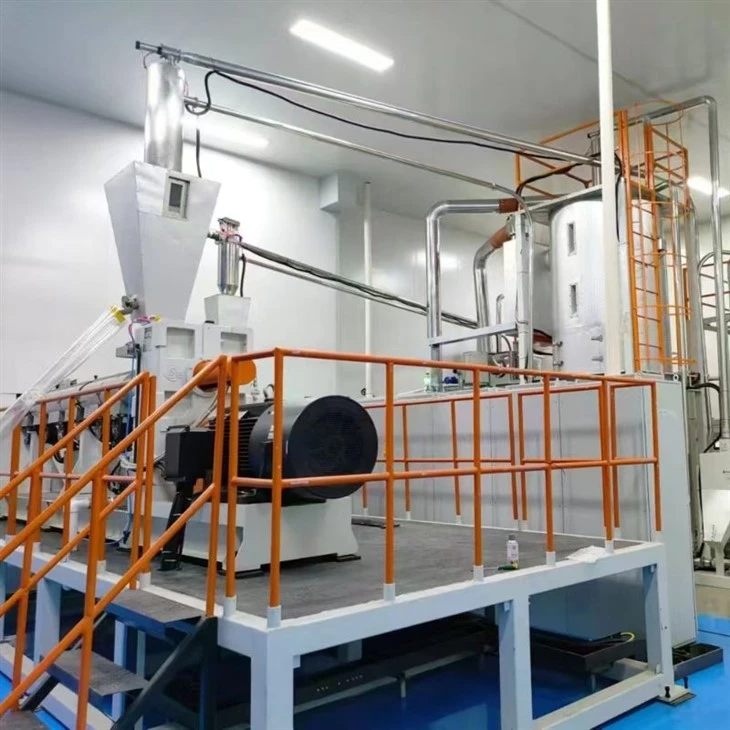

PET Sheet Extrusion Machine Line
PET (polyethylene terephthalate) sheets, especially APET (amorphous PET) and RPET (recycled PET) sheets, are widely used in high-performance packaging fields such as food trays, blister packaging, cosmetics packaging, etc. Its production line has similarities with PVC sheet production line, but due to completely different material characteristics (such as moisture absorption, processing temperature, crystallization behavior), the equipment has its unique design and requirements.
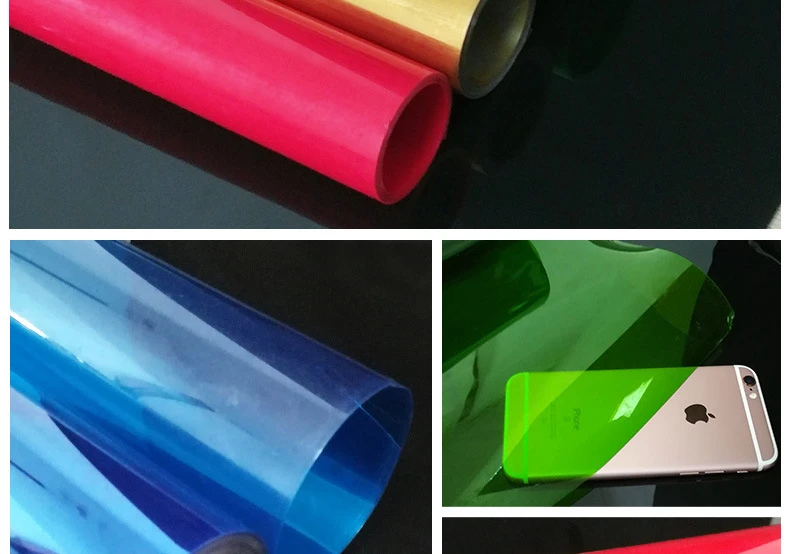
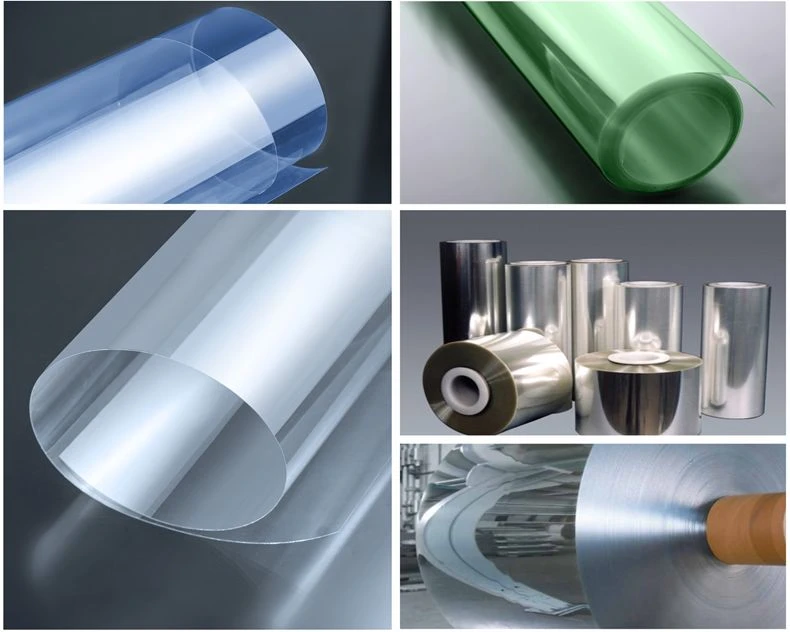
PET products

Core characteristics and processes of PET sheet extrusion machine line
The biggest feature of PET is:
1. Highly hygroscopic: When PET raw materials are processed at high temperatures, moisture can cause them to hydrolyze, leading to molecular chain breakage, brittleness, whitening, and a sharp decline in mechanical properties of the products. Therefore, the drying system is the lifeline of PET production.
2. Obvious crystallization behavior: Rapid cooling is required during processing to suppress crystallization and produce highly transparent APET sheets; Alternatively, heating can promote crystallization and produce heat-resistant CPET sheets (such as oven trays).

PET flake crystallizer and automatic loader system
1. There are multiple sets of probes and control loops at the air inlet and heating box to ensure heating safety, temperature alarm and automatic protection (2 sets of probes, 4 sets of circuits)
2. Optimize the stirring structure to ensure that the material is stirred evenly and smoothly, and the material has no agglomeration
3. 360-degree thermal insulation design (including return air duct) to ensure maximum thermal energy utilization efficiency
4. The latest Liao Wei control technology to ensure Liao Wei's stability and safety
The main components of PET sheet extrusion machine line
A standard PET sheet extrusion production line mainly includes the following systems:

1. Raw material pretreatment system - the most critical part
·Dehumidification and drying system:
·Core equipment: equipped with at least two bee wheel dehumidifiers and dryers.
·Workflow: This is a continuous process. A dryer operates continuously to dry PET raw materials (usually in granular form) at high temperatures (such as 150-180 ° C) for at least 4-6 hours, reducing the moisture content to below 50ppm (0.005%) (usually requiring<30ppm). The other one is used as a backup or regeneration to ensure uninterrupted production.
·Vacuum suction system: The dried raw materials are directly fed into the extruder hopper through a fully enclosed vacuum pipeline to prevent further moisture absorption.
2. Extrusion system
·Extruder:
·Single screw exhaust extruder: This is the standard configuration for PET sheet production.
·Why exhaust type? Although the raw materials have been dried, a small amount of volatile gases (moisture, oligomers) may still be generated during the melting process. The exhaust extruder is equipped with exhaust holes and connected to a vacuum pump, which can forcefully extract these gases during the melting stage, ensuring that the final product is bubble free and defect free.
·Screw design: Specially designed for the viscosity, melting point, and other characteristics of PET, usually with a longer L/D (aspect ratio), such as 32:1 or greater, to ensure sufficient melting and homogenization.
·Melt filter and gear pump (optional but important):
·Melt filter: Especially when using RPET (recycled material), it is used to filter impurities and carbide particles in the melt.
·Gear pump: installed between the extruder outlet and the die head, used to establish extremely stable melt pressure, eliminate flow fluctuations caused by extruder screw pulses, and ensure ultra-high standard uniformity of sheet thickness. It is a key optional component for producing high-end sheet materials.
·Mold head:
·Hanger style T-shaped die: Similar to PVC sheet wire, it distributes molten PET into blanks of the desired width and thickness. The channel design needs to adapt to the melt characteristics of PET. The mold lip is usually equipped with a precision hot bolt adjustment device for online fine adjustment of the lateral thickness of the sheet.
3. Shaping and cooling system
·Three roll calender:
·Core function: For PET, the primary task of the three rollers is rapid cooling. The high-temperature (about 280 ° C) PET melt coming out of the mold must be rapidly cooled below its glass transition temperature (Tg) to suppress crystallization and obtain highly transparent, non crystalline APET sheets.
·Roller temperature control: Three rollers are usually arranged vertically or at a 45 ° angle. The middle roller is a fixed roller, and the upper and lower rollers are adjustable rollers. There is constant temperature cooling water inside the roller, and precise temperature control is required.
·Surface effect: Using mirror rollers can obtain smooth sheets, while using frosted rollers can produce matte sheets.
4. Traction, thickness measurement and winding system
·Traction unit: composed of multiple cooling rollers and rubber traction rollers, it smoothly guides the sheet out of the three roller machine and further cools it.
·Online thickness gauge (beta ray or infrared): During the traction process, the non-contact thickness gauge continuously scans the full width of the sheet and provides real-time feedback on thickness data. This system can be linked with the lip hot bolt adjustment system to achieve automatic thickness control (ATC), controlling the thickness tolerance within ± 2-3%.
·Edge cutting device: Cut off the thicker waste edges on both sides of the sheet.
·Winder: Adopting a center/surface winding or turret type dual station winding machine, the tension control system is crucial to ensure consistent tension of the coil, without wrinkles or stretching deformation.
5. Edge material recycling system
·The cut waste material is immediately crushed into fragments by an online crusher, and then continuously mixed back into the main drying system through a proportional feeder in a certain proportion (such as 10% -30%), mixed with new materials, and reused, greatly reducing costs.
Special type: CPET production line
The production line for heat-resistant CPET sheets (used for microwave/oven trays) requires additional crystallization equipment.
·Process: Mr. produces transparent APET sheets and immediately passes them through an online heating crystallization oven. The sheet is heated to the crystallization temperature range of PET (~160-180 ° C), transforming it from an amorphous state to a crystalline state and becoming an opaque/milky white CPET sheet. Its heat-resistant temperature can be significantly increased to over 220 ° C.
·This line is equivalent to adding a crystallization section at the back end of the APET production line.
·The drying system is the core: a high-quality dehumidification and drying system must be invested, which is a prerequisite for producing qualified PET sheets.
·High precision requirements: The requirements for thickness uniformity, transparency, and surface quality are extremely high, so gear pumps, online thickness gauge ATC systems, etc. are often necessary configurations, increasing investment costs.
·Raw material sensitivity: High requirements are placed on the quality of raw materials (especially the cleanliness and viscosity of RPET) and the stability of the production environment.
·Energy consumption: Both drying and extrusion processes require high temperatures, resulting in significant energy consumption.
summary
The PET sheet extrusion machine line is a technology intensive continuous extrusion line, and its core lies in:
1. Ultimate drying: A powerful dehumidification and drying system is the absolute foundation for ensuring product quality.
2. Precision extrusion: The exhaust extruder, gear pump, and precision die together ensure the purity, stability, and uniformity of the melt.
3. Precise shaping and control: The three roll rapid cooling process determines the transparency and basic performance of the sheet, while the online thickness measurement and automatic feedback system (ATC) ensures the ultimate uniformity of the product thickness.
Choosing a PET sheet extrusion machine line is actually choosing a highly automated system that can accurately control temperature, pressure, moisture, and tension.
PET is a hygroscopic material. At atmosphere condition it absorbs humidity. During the extrusion process the humid material is subject to the hydrolysis chemical reaction that affects the mechanical properties of the extruded foil. For this reason the common technology needs to dry the material with a high level of power consumption.
Using COWIN last generation of twin screw extruders, we can help to avoid the drying process and extrude the PET material, both pellets and flakes. The humidity is kept-out through a proper vacuum device installed on the extruder thus avoiding or reducing the hydrolysis process consequences.
1. With twin screw solution, you can remove the pre-drying system and crystallization system. This will save minimum 30% of the energy.
2. The final sheet quality is improved as degradation is avoided occurred during hours of pre-crystallization and pre-dry period.
3. With COWIN special super vacuum system and proper screw configuration, we can control the IV drop within an acceptable range, normally 0.03 depends on the moisture content.
4. With twin screw, you can fully use the extruder capacity. While single screw extruder has a much lower running speed, you will lose more energy to get the same output.
SPECIFICATION
|
Model |
CHT-52 |
CHT-65 |
CHT-75 |
CHT-85 |
CHT-95 |
|
Screw diameter |
51.4 |
62.4 |
71 |
81 |
93 |
|
L/D |
40 |
40 |
40 |
40 |
40 |
|
Screw speed (rpm) |
266 |
300 |
300 |
266 |
266 |
|
Main motor (kw) |
37 |
75 |
132 |
160 |
250 |
|
Barrel heating (kw) |
23 |
28 |
44 |
55 |
71 |
|
Degassing volume (m3/hr) |
1500 |
2500 |
4000 |
5000 |
7000 |
|
Ultimate vacuum level in extruder chamber (mbar) |
2 |
2 |
2 |
2 |
2 |
|
Final product thickness (mm) |
0.2-1.8 |
0.2-1.8 |
0.2-1.8 |
0.2-1.8 |
0.2-1.8 |
|
Output range (kg/h) |
80-100 |
160-190 |
300-350 |
360-420 |
560-630 |
Hot Tags: pet sheet extrusion machine line, China pet sheet extrusion machine line manufacturers, suppliers, factory, PP PE ABS Thick Solid Board Machine Line, PP Construction Board Machine Line, pp honeycomb board extrusion line, TPE Car Sheet Extrusion and Vacuum Forming Machine, EVA Sheet Machine Line, PP PE PC Hollow Sheet Extrusion Machine Line
Previous
PVC Sheet Extrusion Machine LineNext
No InformationYou Might Also Like


Send Inquiry